PAT Chats: Janna Tay's take on friendship, home and her first play

“My family doesn’t love me for me. They love me for whatever vision they want me to fulfil for them. I don’t get to be free. That’s not really love.”

FOTP - Janna - Proof Options_-66.jpg

Three women, one house. Three lives, one friendship. While trying to decide whether to renew their lease, three best friends try to navigate events that change their lives and force them to question their relationships. A coming-of-age story for women of colour in their 20s, and for their bond more serious than romantic love: friendship.

Janna Tay’s coming-of-age experience didn’t come with the bells and whistles of classic US films. “There’s always a house party, an underwater pool scene, a concerned yet distant parent, and an odd amount of curfew-breaking and freedom. Hardly any of these things happened to us in high school — our relative freedom came later and with a different set of baggage and expectations.” Born in east Malaysia but having lived most of her life in east Auckland, the poet and writer wanted to embrace the move from childhood to adulthood with the nuance of a woman of colour from a diaspora experience.

Having never written a full length play, Tay took up Fresh off the Page’s challenge under mentor Men-Lin Te-Puea Hansen to complete a first draft for the series of new plays across 2019. A published writer in other mediums, Tay’s poetry and essays have appeared or are forthcoming in The Pantograph Punch, Starling, Craccum, and Ghost City Press, as well as winning second prize in Landfall’s 2018 Charles Brasch Young Writers’ Essay Competition. She is the co-founder and editor-in-chief of Oscen Magazine and was a Summer Fling Writer for The Pantograph Punch in 2019. 

Catch the live reading of Homecoming:


Wednesday 7th August

8.30pm, Basement Theatre, Auckland

Register and book your free seat: bit.ly/FOTP_Aug

We chat to Janna about her process, friendship and how she tackled this iconic theme.

Photos: John Rata

Photos: John Rata

What inspired you to write this play?

The gap between my friends’ experiences as women of colour and the wave of coming-of-age films lately about young white women coming to grips with their identity in their teens. There’s always a house party, an underwater pool scene, a concerned yet distant parent, and an odd amount of curfew-breaking and freedom. Hardly any of these things happened to us in high school — our relative freedom came later and with a different set of baggage and expectations. These coming-of-age questions are timeless. I wanted to answer them from my own perspective. 

What were the challenges you faced during the process?

I’ve never written for theatre! I primarily write poetry and creative non-fiction, and they exist on such different levels of storytelling. Where poetry and essays tend to be more insular, theatre mainly occurs in the interactions between people. I had to figure out how to build and convey character without relying on description or inner monologues. It was also so personal that it became difficult to confront at times. I’m eternally grateful to my mentor, Mei-Lin Te Puea Hansen, for guiding me through the process both technically and emotionally. 


What do you think makes a good story?

Believable characters and memorable action – when you remember the characters for what they did because you’ve become invested in the ways they think and the choices they make. Plot, to me, is only ever as good as the characters who are in the middle of it. 

FOTP - Janna - Proof Options_-52.jpg

How do you want people to feel at the end of your play?

I want those to whom it relates to feel seen and heard, and I want the play to prompt the audience to reflect on what home and family mean to them. And to feel hopeful about both no matter how fragmented or painful the answer. 


‘Who’ did you write your play for? 

Women of colour coming of age in their 20s, as inspired by and for my friends. We’re all of a particular age and demographic trying to navigate questions of deciding who we want to be and how we want to live our lives. And so, it feels selfish but at the same time I don’t think it’s a story that’s been told. The questions we’re asking can’t be answered without acknowledging the cultural and societal aspects from which we arise, which I haven’t seen fully explored when it comes to race, gender, sexuality. Sometimes you need to tell a story that is specific enough to furnish a universal truth. While I’m not trying to reach everyone, I hope I’ve been able to incorporate my experiences in a way that takes the story beyond them. 

FOTP - Janna - Proof Options_-33.jpg

What character was the easiest to write? Why?

Rather than there being one specific character, I found different aspects of each character easier to write than others. I knew early on the broad personalities of each of them but once I started placing them in situations that challenged their development, I found it hard to know how to have them react. 

Can you explain any ‘theatrical’ ideas/concepts utilized in the play?

Throughout the play, there’s a half-built IKEA-type table that the characters interact with, which acts as a motif that mirrors where they are in their friendship with one another. They start out trying to build it, then they accidentally break it, and try to repair it. It also occasionally draws the battle lines between arguments and acts sometimes as a barrier, sometimes as a way to bring them together. 

I also tried to move away from a more traditional structure of having an exposition, complication, and resolution because nothing is ever really resolved, and that’s okay. I wanted instead to make sure that I explored each character and the one-on-one relationships within the larger friend group. And I was more interested in holding tension and having events ebb and flow rather than being cathartic or final. 


Thanks to Creative New Zealand, Playmarket New Zealand, Basement Theatre, Equity New Zealand and Unitec Department of Performing & Screen Arts.
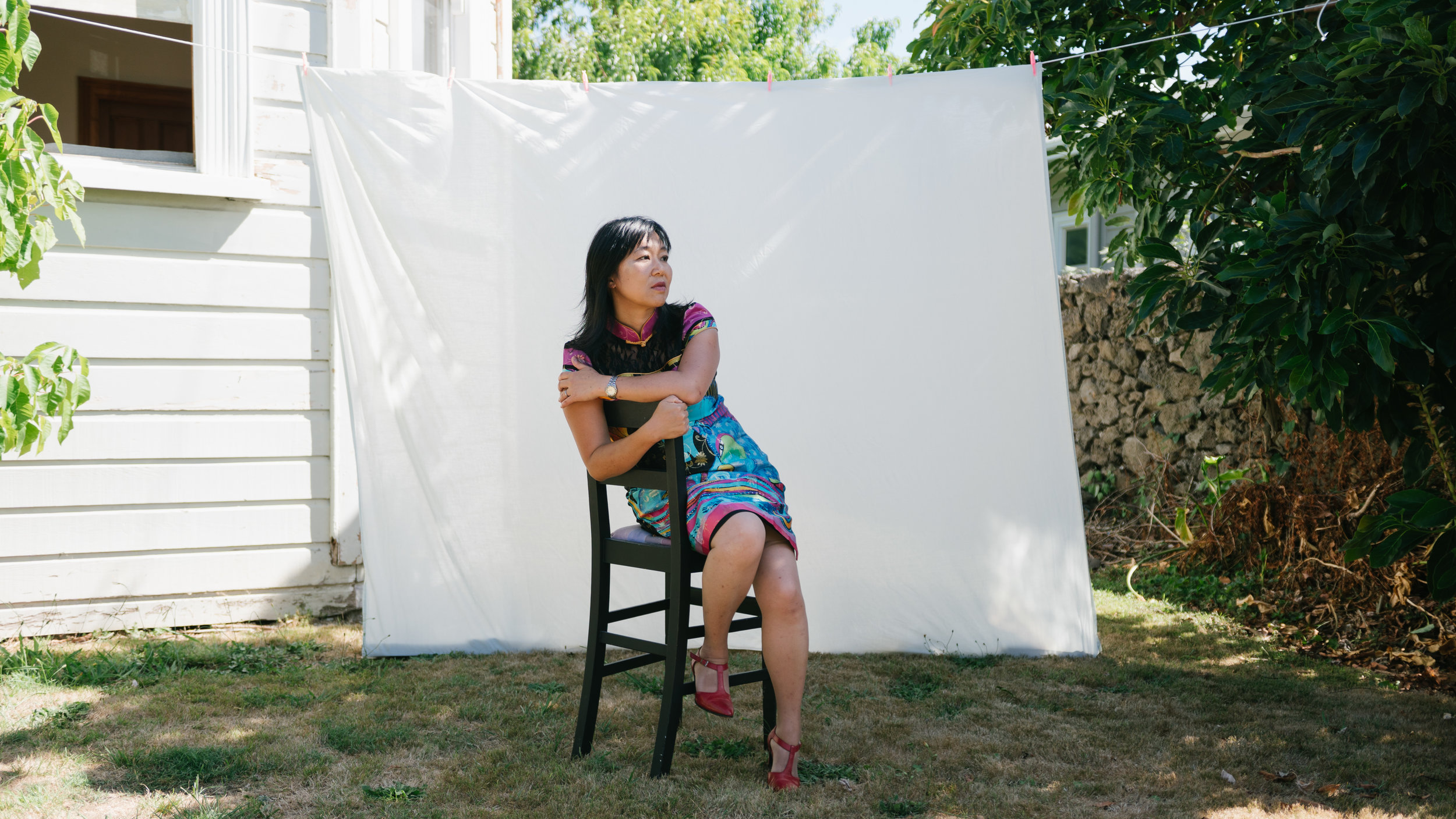

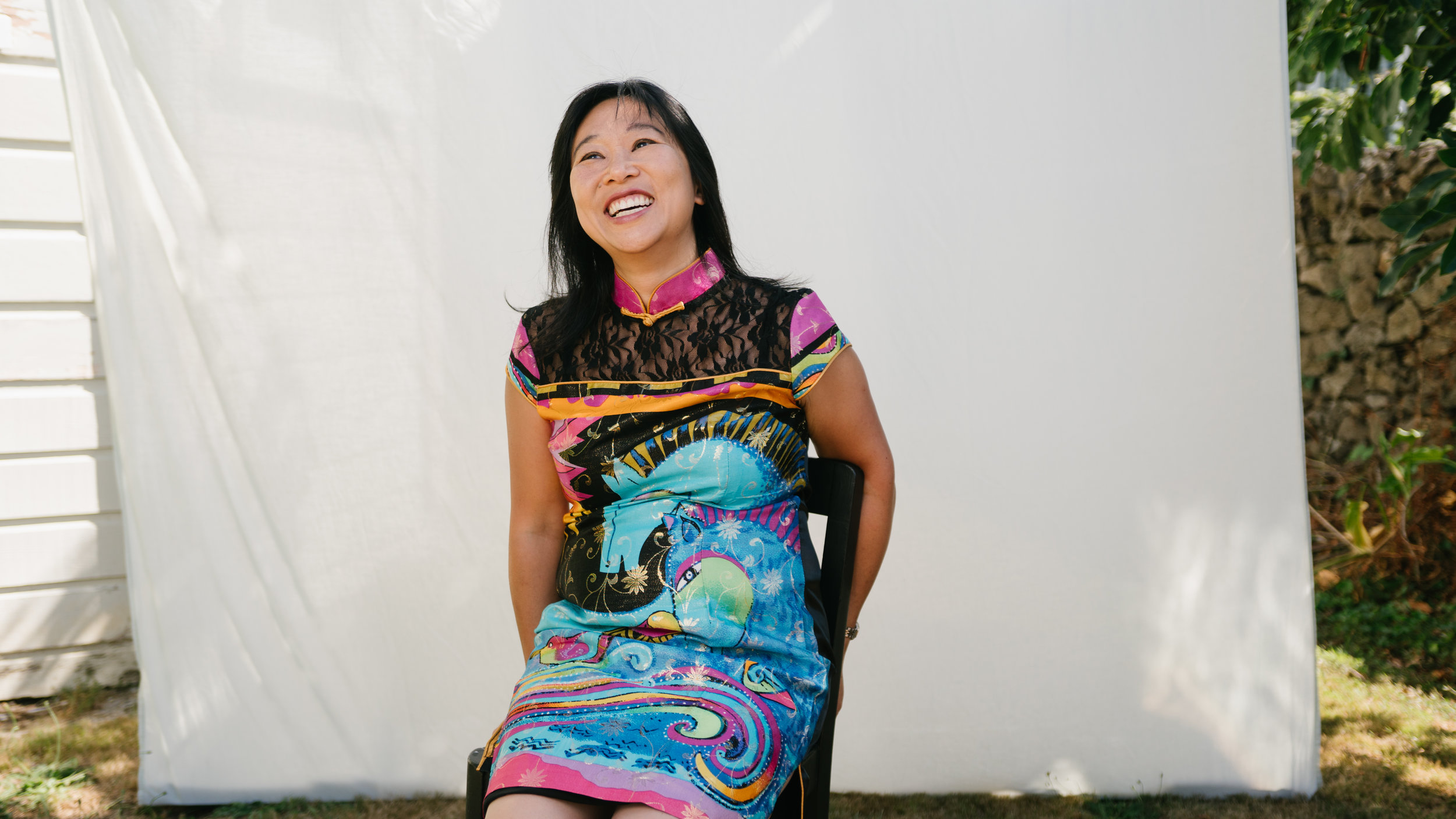


PAT Chats: Renee Liang on bullying in the medical profession and her new work The Doctor Monologues

“Medicine's moment is coming - it's already happening overseas, with high profile media stories in both the UK and Australia of young women who had been bullied and harassed. I realised I had the right mix of skills to do what I hadn't been brave enough to do - call it out.”

Images: John Rata

Images: John Rata

Doctors are perfect and kind, right? Wrong. Lauded playwright and poet Renee Liang is embarking on a new project, The Doctor Monologues, that peels back the dark underbelly of bullying and harassment in the medical profession. Mentored by dramaturg Eleanor Bishop under Proudly Asian Theatre’s ‘Fresh off the Page’ new play initiative, Liang has collated stories across 4 countries to expose and question the often toxic practices that occur in her other job.

A second-generation Chinese Kiwi, Liang is a poet, playwright, paediatrician, medical researcher and fiction writer, having written in many genres including short and long fiction, poetry, theatre, non fiction, blogging and arts journalism.  

Among many other achievements, Liang organises community arts events such as New Kiwi Women Write, a writing workshop series for migrant women in association with Auckland Council. She is a regular contributor to The Big Idea, a website linking NZ's arts community. Renee has written, produced and nationally toured seven award-winning plays, published eight anthologies of migrant women's writing and has been published and anthologised as a poet.

We chat to Renee about her process, and what fired her to create a new play for the series.

FOTP - Renee Proof Options-49.jpg

What inspired you to write this play?

I was bullied as a medical student. I was bullied as a house surgeon. I was bullied all the way through my training, and now I'm a specialist, you'd think it doesn't happen, but the bullies just come from a different place.  We're just like the other professions, and our rates of poor mental health, burnout and depression speak for themselves.

It was because of bullying that I turned my back on medicine. I guess I have my bullies to thank for my career as a playwright. I'm glad to be a writer, but I wish that it hadn't happened that way.

Then #MeToo happened. And the recent exposure of bullying and sexual harassment in the legal profession. Medicine's moment is coming - it's already happening overseas, with high profile media stories in both the UK and Australia of young women who had been bullied and harassed. I realised I had the right mix of skills to do what I hadn't been brave enough to do - call it out. 

What were the challenges you faced during the process?

Bullying and sexual/mental and physical harassment is rarely reported in my profession. There's a hierarchical structure - limited training places, the fact that the people at the top select their trainees, report on them and decide who to progress. The victims are at every stage of this hierarchy, but most bullies are in positions of power. The system is invested in supporting the status quo - in my interviews, the most common response by hospital management to complaints of bullying was to try to shush it up, and in some cases, punish the victim. There's also the idea that you are not being professional if you rock the boat, and admitting anxiety or depression is a sign of weakness. I lost count of the number of times a well-meaning mentor told me 'you'll be able to grow a thick skin after this.'

Because of this, I knew I would have a hard time getting people to trust me with their story. I reached out using word of mouth, knowing there would be low trust of anything endorsed by our various professional organisations (who are often, either by being conservative or through inaction, part of the problem.) I created an anonymous survey form and people from the UK, Australia and India found it as well as many from NZ - so my work has now become international.

Creatively, I've been working with my dramaturg Eleanor Bishop to explore the performative aspects, thinking about how to touch these topics safely but boldly. Eleanor has great experience working in this field and we both believe in the power of performance to bring people together to talk about the big issues - so this has become the central aim of my piece.

FOTP - Renee Proof Options-40.jpg
FOTP - Renee Proof Options-54.jpg

What do you think makes a good story?

I've learnt over the years that truth makes a good story. An audience instinctively tastes truth. They have a blood lust - I remember the first time I had a play read in public and every line my actors read felt like I was being stripped naked in front of the audience.  Fiction can be more truthful than the facts. It's the writer's job to cut through all the information and present emotion in its raw form.  

My plays have all been heavy on narrative, but this one is different - that's why I'm not calling it a play, more a performance piece.  But I hope that it too will carry people with them, pull apart the issues, dissect them, turn them inside out.

How do you want people to feel at the end of your play?

 It's a heavy topic but I hope there's enough lightness and playfulness there to let people out at the end ready to talk.  I am writing this with the intention of creating a safe space to talk afterwards.

‘Who’ did you write your play for? 

I wrote it for anyone who has been bullied, but especially my fellow doctors and medical students.


Can you explain any ‘theatrical’ ideas/concepts utilized in the play?

I'd rather not explain - they are in there to be experienced and responded to.

Catch the live reading:

Wednesday, 8:30 PM
July 24th, 2019
TAPAC (The Auckland Performing Arts Centre)

Register your attendance here: http://bit.ly/FOTP_July
This FREE event work on a first-come-first-serve basis, so register for your seats now!


Interview by Marianne Infante.

PAT and PASC launch web-based screenwriting initiative for Asian practitioners

Big news!

We are excited to launch our brand new initiative for Asian screenwriters - Page to Pitch! 

Proudly Asian Theatre has teamed up with the Pan-Asian Screen Collective to find and foster explosive new ideas from inception to pitch.

We are looking for motivated, aspiring Asian and Pan-Asian screenwriters to take part in a mentorship programme, where we help you write, package and pitch a webseries-flexible idea to commissioners, programmers and producers. Mentoring takes place over 6 months, beginning end of August and concluding in January, and is based in Auckland. We are looking for ongoing, 2 part or more stories, episodes etc, to be released on a web-based platform. We are not looking for one off short films, rather stories that have ongoing components. Pitches could include VR/AR, interactive elements, series with a connecting theme, character, tone etc, 2 or 3 part mini-series or anything else you can dream up!

DSC07568.jpg

Aside from no short films, there is no limit to form, style or length. We are looking for innovative stories in content and/or form. We do not have requirements or expectations to deliver ‘cultural’ themes, and no previous experience is necessary. 

Page to Pitch is made possible thanks to generous support from the New Zealand Film Commission.

Fill out the form and submit your draft by 9th August, 5pm to pattheatrecompany@gmail.com.

Email us with any questions!

Submission form:

https://drive.google.com/file/d/1eWAajlS68bclN5nP51ulCWm14mS40rIY/view?usp=sharing

Pitch to Page draft (John Edit V4).jpg


PINAY tickets are Live!!

DSC07484.jpg

Firecracker Outstanding newcomer award’ (Auckland Theatre Awards 2018) winner Marianne Infante makes her professional debut Pinay with signature Filipino flair. The first bilingual Filipino Kiwi play, Pinay amalgamates personal experiences of assimilation and migration with the geological occurrences of Philippines’ Mt Pinatubo volcanic eruption and the Christchurch earthquakes to collide the binaries of race, culture, relationships and religion to tell a story of the in-between.

Pinay follows Filipinas Mariella and Alex, a loving mother-daughter duo whose conflict comes to a head when Alex moves in with her Pakeha boyfriend Seth. Pinay is a moving, challenging and often hilarious play that explores the pains of navigating a difference of core values with our loved ones.

PINAY live development reading 2018. Photo: John Rata

PINAY live development reading 2018. Photo: John Rata

With a unique performance style, Pinay integrates traditional Filipino elements of dance, karaoke and contemporary movement sequences to reflect the kaleidoscopic identity inherent in many New Zealanders today.

Directed by James Roque, written (and starring) Marianne Infante with an ensemble cast featuring Donna Dacuno, Richard Perillo, Lucas Haugh, Marwin Maui Silerio and Matiu Hamuera.

13 AUG - 24 AUG  

8:00PM

Basement Theatre

Book tickets HERE

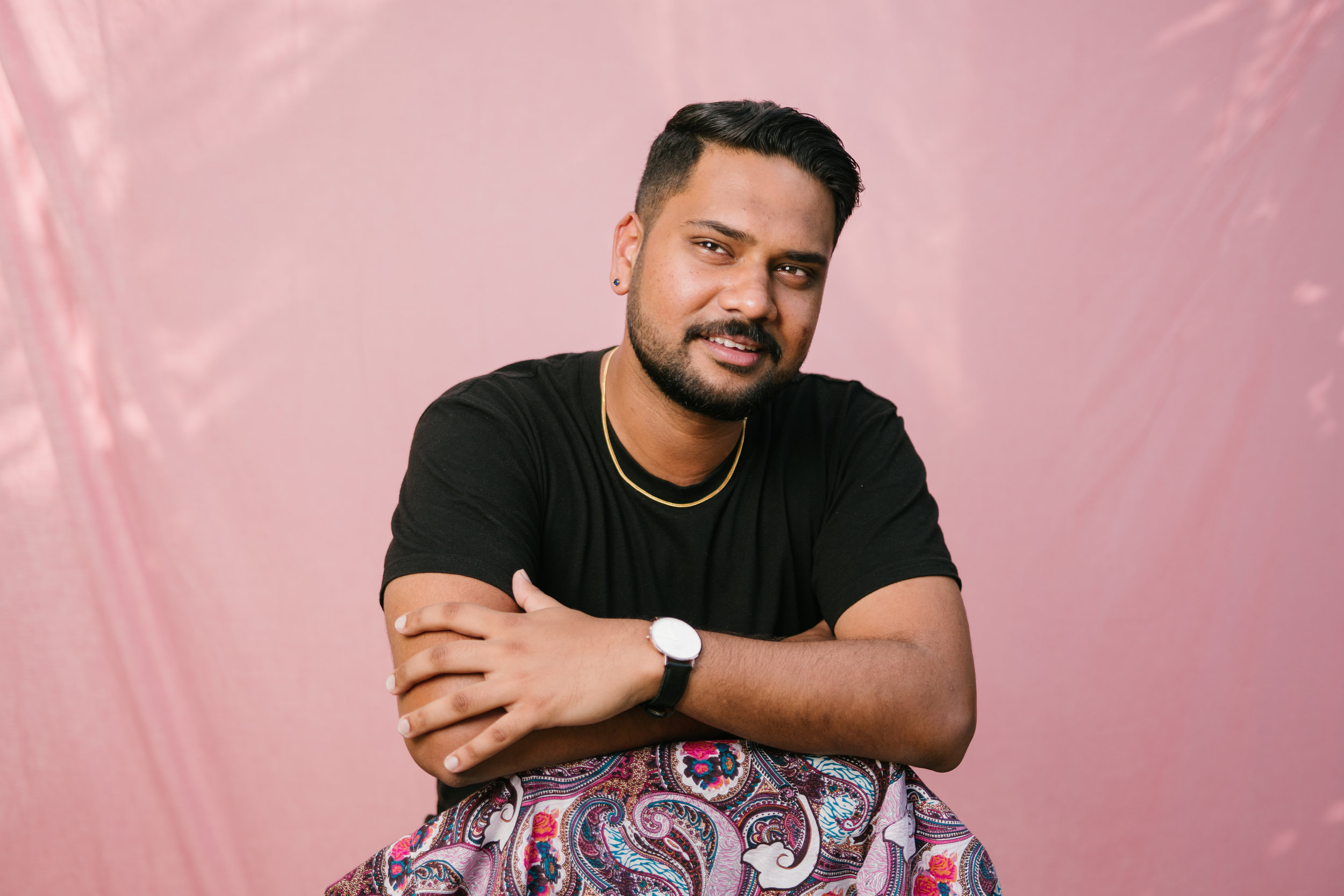
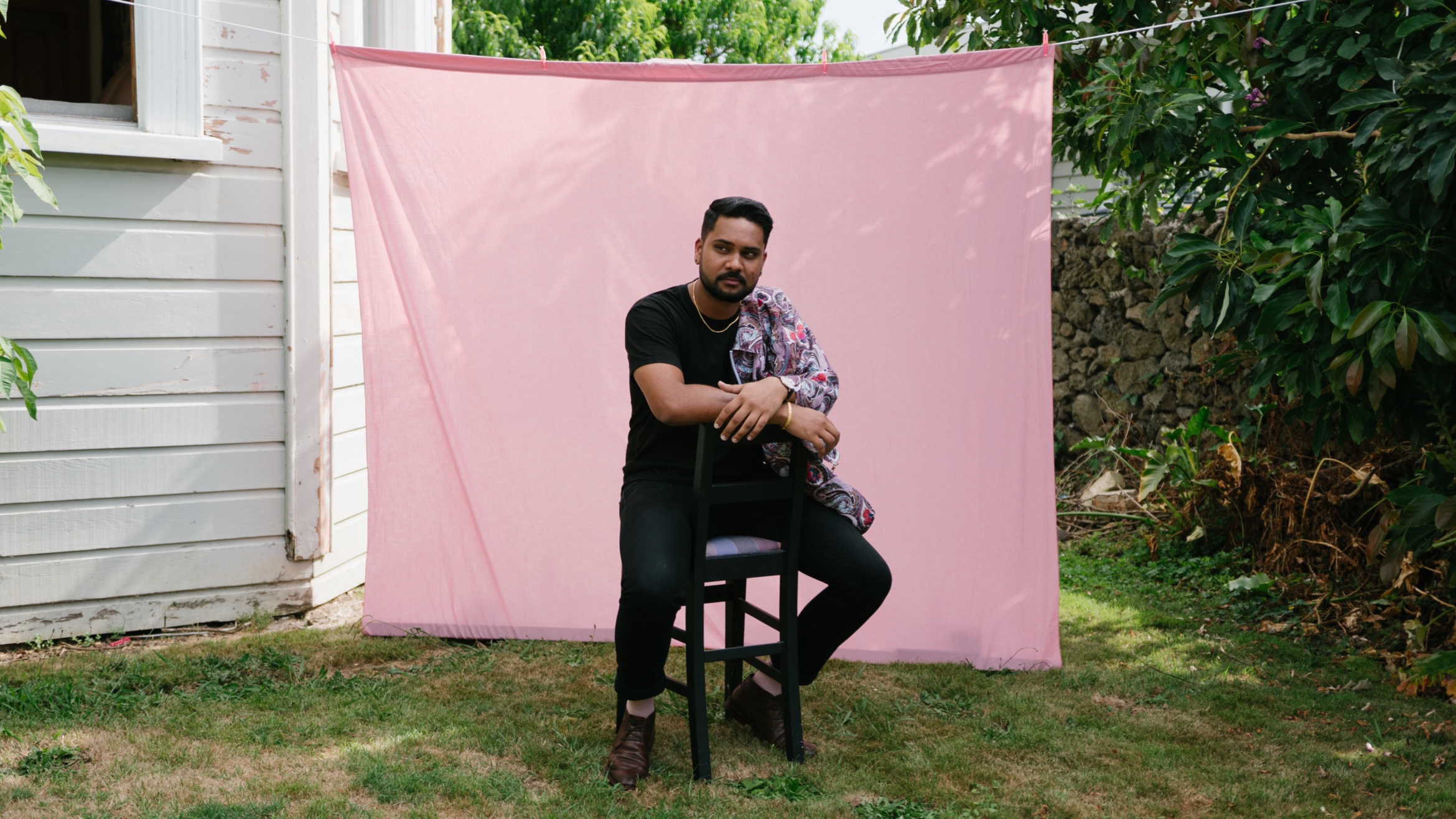
PAT Chats: Bala Murali Shingade - what do we choose to reveal?

“What’s wrong with it?" 
“We have to make it more... Indian.”

FOTP - Bala Proof Options-42.jpg

Bala Murali Shingade has a lot of questions.

Having graduated from the University of Auckland with an MA in Screen Production last year, Bala has been working as a freelance writer, director and actor in Auckland both on stage and for screen. His theatre credits include Dara, First World Problems and A Fine Balance with Prayas Theatre Company. Recent screen credits include writing and directing Brown Boy Lies, his MA thesis film, and 800 Lunches, one of the six Someday Stories short films funded by the Outlook for Someday.

Taking up the challenge to write a full length play as part of PAT’s Fresh off the Page series, the filmmaker and storyteller asks his characters and the audience how they present themselves in different situations, and why;

“The central question of the story is about why people become different people in different contexts. What makes a person who they are? What is identity? This play will explore what exactly it is to be ‘Indian’ or ‘New Zealander’ in the 21st century, from 3 different generations. What makes you who you are? Just because you speak English well, does that make you more of a New Zealander? Just because you don’t go to the temple, does that make you less Indian?”

'What Have You Become?' is his response - an ensemble family dramedy that hopes to explore questions around identity and culture in the context of contemporary Auckland.

The surprise arrival of their grandparents forces a dysfunctional Indian New Zealand family to front an image painted by expectation - that of a normal, happy Indian family. In the ensuing weekend chaos, secrets are spilled, relationships are broken and true identities are revealed.

PAT chats to Bala about his first play below.

Catch the reading on June 5th at The basement, 8.30pm!

Free tickets available here

Photos: John Rata

Photos: John Rata

What inspired you to write this play?

The people around me inspired me to write this play. It’s interesting to watch how people change the way they present themselves in different situations, with different people. I wanted to explore how and why people do this. I grew up watching the epic family drama films of late 90s/early 2000s Bollywood cinema, which were an influence on this piece. I also really enjoy ensemble stories with intertwining storylines and that seemed like a perfect way to explore a group of characters all in conflict with each other.

What were the challenges you faced during the process?

Making all the characters distinct, with their own storylines, their own ways of speaking and their own personalities was a huge challenge. It was also challenging to write a full-length piece – everything I’ve written previously has been short theatre or short screenplays.

What do you think makes a good story?

Compelling characters that we are made to empathise with, in conflict with each other trying to make difficult decisions is always interesting to watch/read about. I love pieces that are comedic but with a bit of serious drama in them too.

FOTP - Bala Proof Options-34.jpg
FOTP - Bala Proof Options-40.jpg

How do you want people to feel at the end of your play?

First and foremost, I want people to feel entertained. It would be a bonus for people to feel pleased at seeing characters like their own friends and whanau on stage. Hopefully, if they are satisfied with the story, it will make people reflect on themselves and the people in their lives, maybe question the way they interact with each other.

‘Who’ did you write your play for?

I wrote this play for the community – there is a growing collection of talented, passionate, eager Desi artists in Aotearoa New Zealand that need their own stories to tell that are specific to them and their experiences – stories that resonate with them and their own circles.

What character was the easiest to write? Why?

Rani (the grandma) was probably the easiest to write because she is the closest to being a caricature – everyone knows an aunty or grandma like her in our communities. So I had fun coming up with crazy stuff for her to do/say.

 Can you explain any ‘theatrical’ ideas/concepts utilized in the play?

Not sure if there’s an official ‘theatrical’ concept for this, but the entire play takes place in the dining room and kitchen of the Kumar household. The characters all enter and exit at various times and an entire party takes place in the other parts of the house but we only ever see this space and the interactions between our characters that take place there.